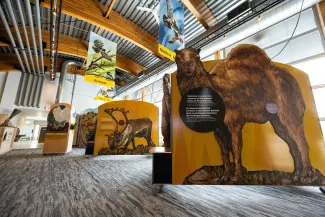

Our program for young visitors in preschool and Kindergarten will involve an introduction to core concepts related to Beringia, with a general focus on the animals in the Yukon from the past and present. Learn about the lifestyles of these animals, how they survived the cold of the Ice Age, and participate in a mock dig outside! (weather dependent)
Big Idea (Biology): Plants and animals have observable features.
Content (Biology): Basic needs of plants and animals; adaptations of local plants and animals.
Big Idea (Earth/space): Daily and seasonal changes affect all living things.
Content (Earth/space): Weather changes; seasonal changes; living things make changes to accommodate daily and seasonal cycles
 Come learn about the many ways in which water, both in its liquid and frozen states, can have an impact on the appearance of modern-day landscapes. You’ll also be introduced to Ice Age herbivores and carnivores, what made their lifestyles so different, and what they did to find success in these harsh conditions as the water froze and thawed throughout time.
Grade 1:
Big Idea: (Biology) Living things have features and behaviours that help them survive in their environment.
Content: (Biology) Structural features of living things in the local environment; Behavioural adaptations of animals in the local environment
Grade 2:
Big Idea: (Earth/space) Water is essential to all living things, and it cycles through the environment.
Content: (Earth/space) Water sources including local watersheds; The water cycle
Grade 3:
Big Idea: (Bio) Living things are diverse, can be grouped, and interact in their ecosystems. (Earth/space) Wind, water, and ice change the shape of the land.
Content: (Bio) Biodiversity in the local environment; Energy is needed for life; (Earth/space) Major local landforms; Local First Peoples knowledge of local landforms; Observable changes in the local environment caused by erosion and deposition by wind, water, and ice.
 In this program, the primary focus is on the two dominant biomes of the Ice Age: the dry, cold grasslands of the glacial periods and the damp, warmer forests of the interglacial periods – as well as what caused this shift back and forth throughout the Quaternary period.
Grade 4:
Big Idea (Biology): All living things sense and respond to their environment.
Content (Biology): Biomes as large regions with similar environmental features.
Big Idea (Earth/Space): The motions of Earth and the moon cause observable patterns that affect living and non-living systems.
Content (Earth/Space): Local changes caused by Earth’s axis, rotation, and orbit.
Grade 5:
Big Idea (Biology): Multicellular organisms have organ systems that enable them to survive and interact with their environment.
Content (Biology): Basic structures and functions of body systems.
Big Idea (Earth/space): Earth materials change as they move through the rock cycle and can be used as natural resources.
Content (Earth/space): The rock cycle; local types of Earth materials.
Grade 6:
Big Idea (Biology): Multicellular organisms rely on internal systems to survive, reproduce, and interact with their environment.
Content (Biology): The basic structures and functions of body systems.
Big Idea (Chemistry): Everyday materials are often mixtures.
Content (Chemistry): Heterogenous mixtures; mixtures separated using a difference in component properties (silt deposits along rivers).
Big Idea (Physics): Newton’s three laws of motion describe the relationship between force and motion.
Content (Physics): Force of gravity (on Earth, gravity pulls objects toward the centre of the planet).
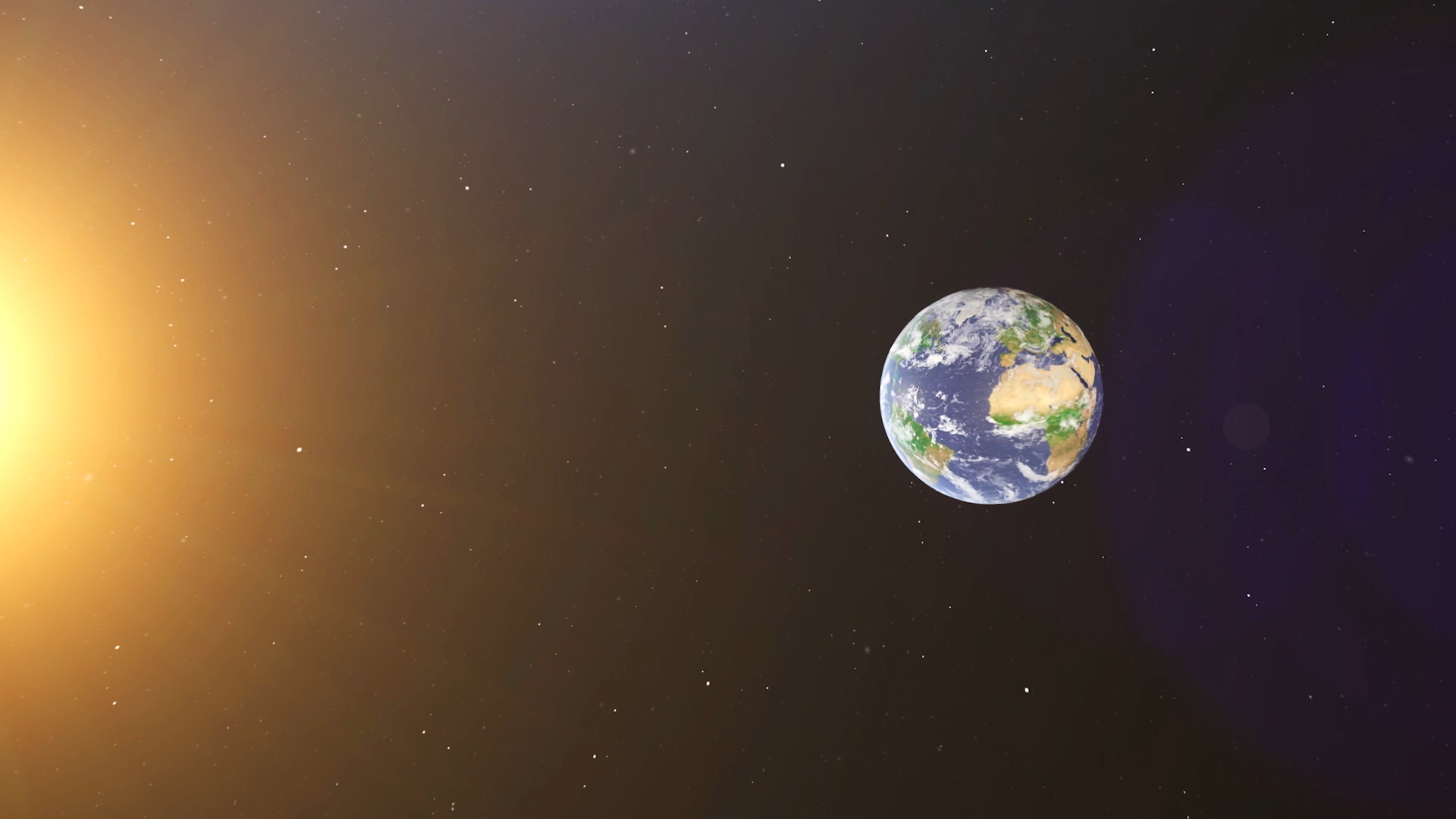
For grades 7 through 9, our programming focuses on some of the most foundational topics in our Ice Age discussions: Evolution of animals before, during, and after the last glacial period; as well as solar radiation and its impact on the growth or melting of glaciers and what caused variability in this over time.
Grade 7:
Big Idea (Biology): Evolution by natural selection provides an explanation for the diversity and survival of living things.
Content (Biology): Organisms have evolved over time; survival needs; natural selection.
Big Idea (Earth/space): Earth and its climate have changed over geological time.
Content (Earth/space): The fossil record provides evidence for changes in biodiversity over geological time; First Peoples knowledge of changes in biodiversity over time; Evidence of climate change over geological time and the recent impact of humans.
Grade 8:
Big Idea (Biology): Life processes are performed at the cellular level.
Content (Biology): Photosynthesis* and cellular respiration; the relationship of micro-organisms with living things.
Grade 9:
Big Idea (Earth/space): The biosphere, geosphere, hydrosphere, and atmosphere are interconnected, as matter cycles and energy flows through them.
Content (Earth/space): Effects of solar radiation on the cycling of matter and energy.
This program is still a work in progress! Please check again at a later date.